Don’t be a BOB: Bitchy, Opinionated, and Bossy. That’s one of the reasons I keep working on strengthening my gratitude, so I’m not a BOB, something I’ve been accused of at times. Much less now, thanks to gratitude. You might not be a BOB at all; maybe you’re a DAN: Denier, Anxious, Naysayer, or a PAM: People Pleaser, Anxious, Manipulator.
My apologies to any Bob or Dan or Pam, it’s not you, it’s me.
You may never know when gratitude saves your life, your business, or your job.
Here’s an example of gratitude as a literal lifesaving practice, read Eli Sharab’s story. He was held hostage for 491 days and used gratitude to survive. You can hear him tell the story himself in this less than 2-minute clip.
Right now, AI, uncertainty, and change are creating significant stress and burnout. AI is disrupting and reshaping work for the leaders I support and for organizations worldwide.
Gratitude is not just for the holidays. Gratitude is for everyone, all the time. And it is especially important for leaders because of its impact and contagious nature. I call gratitude the human Bluetooth.
Having strong gratitude prepares you to save your life, your business, or your job. Change can happen in an instant or slowly drip like a leak that seems harmless until it isn’t. Strong gratitude may save your life someday or at least make it less stressful and better.
So what gets in the way of strong gratitude?
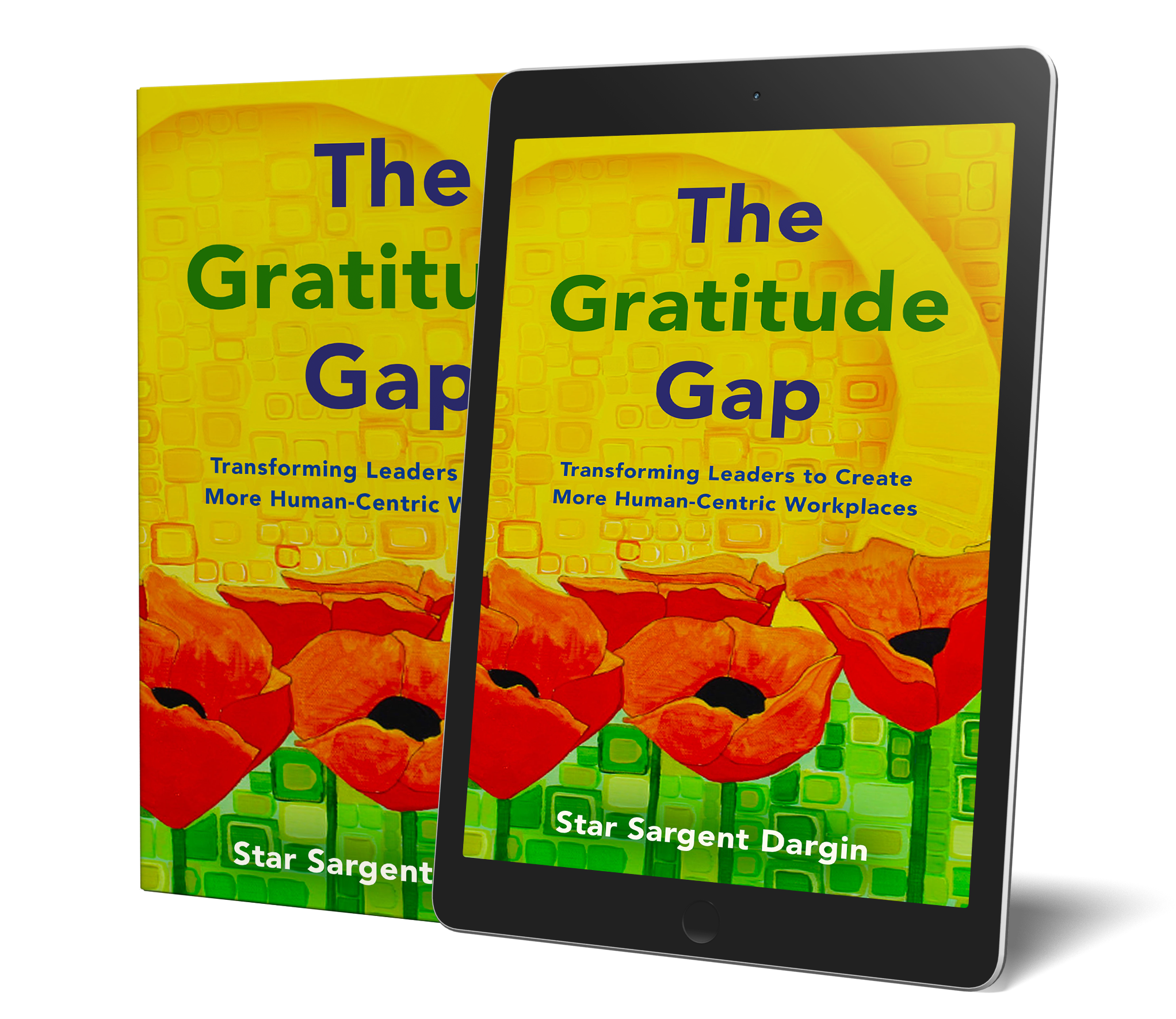
There is a gap. Closing that gap is the focus of my next book, coming January 2026: The Gratitude Gap: Transforming Leaders to Create a More Human-Centric Workplace. The gap is the space between what is possible and making it real by having the ability to externalize expression that shapes culture and yields positive, sustainable results.
Bottom line: Leaders always need to strengthen gratitude as a strategic foundational skill. Gratitude is the foundation on which all other skills can be built more easily.
Gratitude is NOT the only skill leaders need. It pairs and aligns with every leadership skill and model—communication, negotiation, influence, planning, or managing.
Many years ago, while teaching a leadership workshop, a participant asked why their manager, despite using all the recommended communication techniques, still communicated poorly. Together, we uncovered the answer: “He leads from fear and negativity.” That moment stayed with me. Techniques can only go so far. Gratitude makes the techniques work.
When gratitude is present, communication becomes clearer, more authentic, and more effective. It builds trust. That’s the ripple effect of gratitude.
What this means for you as a leader: Don’t just apply techniques, infuse them with authentic gratitude if you want your messages to land. Make building gratitude a goal for the upcoming year. Focus on closing the gratitude gap and build your skills on top of that foundation.
In 2026, each monthly leadership briefing, called GEMS, will focus on one leadership challenge or skill or models grounded in gratitude, with a side of AI to learn and explore.
This year, instead of being a BOB (bitchy, opinionated, bossy), I’m using gratitude to help me be more of a KOL (Kind, Open, Leader).
- What ONE leadership skill do you need for 2026, and how will you get there?
- What is your Gratitude Gap, and how can you close it?