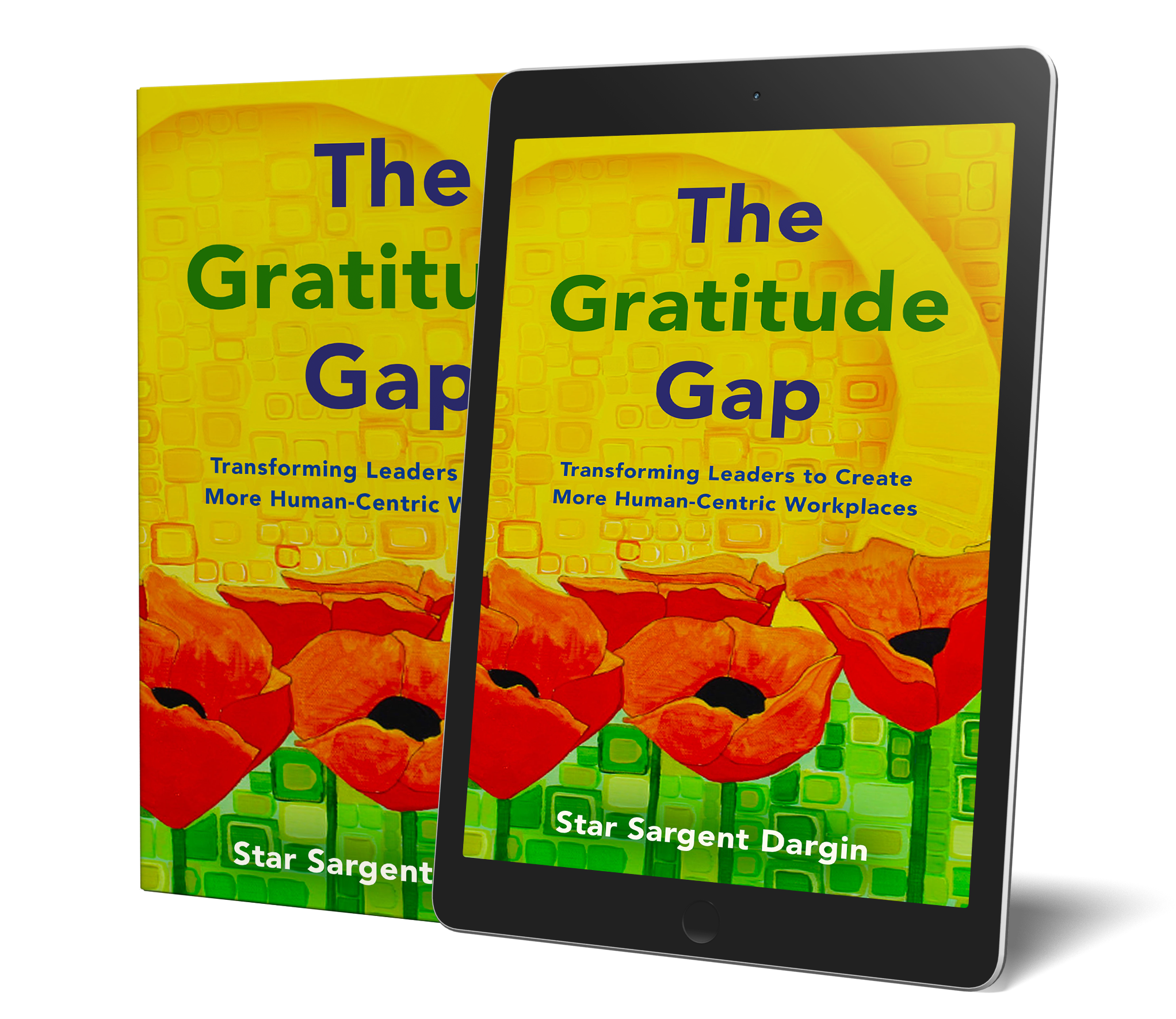
The most common gratitude myth I see?
Believing you are already “grateful enough.”
This is the eye-roll moment. The part where some leaders mentally check out and think, “I already do this. There is nothing new, worthwhile, or helpful to learn here.” That is a myth!
Here’s the thing: you can never be too grateful. The moment you stop actively practicing gratitude, the benefits stall. When you don’t strengthen gratitude, you don’t get the amazing, science-backed benefits leaders need NOW more than ever. Gratitude is not a checkbox. It’s a skill you learn once and are done. It becomes part of you and strengthens over time. You must practice it to maintain it. If I skip a few days of practice, I notice it. I become crankier, more withdrawn, and negative.
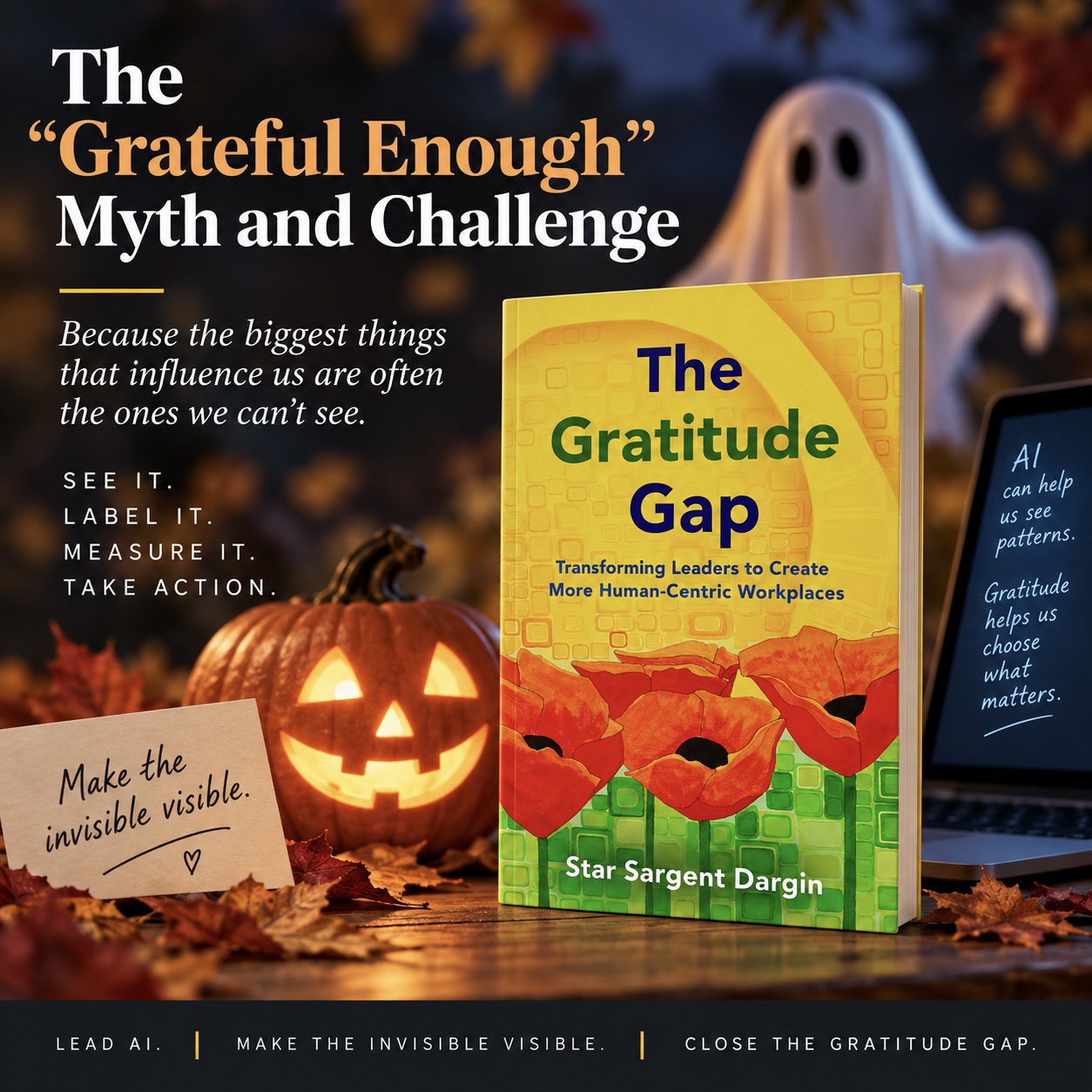
Leaders get stalled in strengthening gratitude for many reasons. Here are some of these invisible barriers:
- They don’t see gratitude as a strategic skill; hence, they don’t work to strengthen it
- They believe it’s too “soft,” too nice”, “too fluffy, ” or “too fake” for tough leadership moments
- They’ve never identified their own unique gratitude challenges
- Their feelings of gratitude are not aligned with their actions
Some challenges are obvious, like staying grateful around negative people. Others are subtler and more complex, like working in cultures steeped in toxic positivity, where “gratitude” is code for “just get over it.”
And because gratitude is often invisible, misunderstood, and deeply personal, it’s easy to assume we’re grateful enough when we’re just scratching the surface.
October seems like the perfect month to talk about invisible things. Ghosts may or may not be real, but invisible leadership forces are. Gratitude, trust, fear, assumptions, and habits can haunt or strengthen a workplace, even when no one names them.
Unless you’ve mastered gratitude like Desmond Tutu, Malala, or Yoda, chances are there’s room to strengthen it.
Why is it important to see these often-invisible challenges? Simple. Once you see them, you can’t unsee them. When you can see them, you can label them, measure them, and take action to strengthen your gratitude foundation. That is closing the gratitude gap.
AI makes this even more important. As we increasingly use AI to help us think, write, decide, and communicate, we need to be more conscious of the human qualities we bring to leadership. AI can help us in many ways, but it shouldn’t decide for us. We decide based on our judgment, what we know, and our values. Lead AI. Don’t let AI lead.
You never know when you will need your strengthened gratitude. It could literally save your life or simply help you respond better in a difficult meeting. I have many stories to share of gratitude being a lifesaver and simply making a difficult situation better. I would love to hear your story.
Are you brave enough to admit you are not “grateful enough”? I’m not; that is why I obsessively write, study, learn, and listen to stories of gratitude.
What gratitude challenge is haunting you, and what might change if you made it visible and acted on it?