“The Glad Game ” was a wildly popular concept from a 1913 novel called Pollyanna, by Eleanor Porter, about an orphaned little girl who played “The Glad Game,” taught to her by her father, in which, no matter how difficult life became, she would find something to be glad about. Pollyanna has been called the Harry Potter of her time.
Over time, the term “Pollyanna” became almost an insult, used to describe someone as naïve, unrealistic, or blindly optimistic.
I have been called a Pollyanna. Not recently. It’s either because I am no longer a Pollyanna or because the name has drifted into the archives of historical phrases.
I was excited to visit Littleton, NH this summer (thanks Pam), the hometown of the author of “The Glad Game.”
My grandmother used to tell me she knew the Porter family. It was one of those old family stories that I didn’t pay much attention to. The timing fits. My grandmother was born in 1906 in Boston, and her family spent summers throughout northern New Hampshire, that aligns with Eleanor Porter’s life.
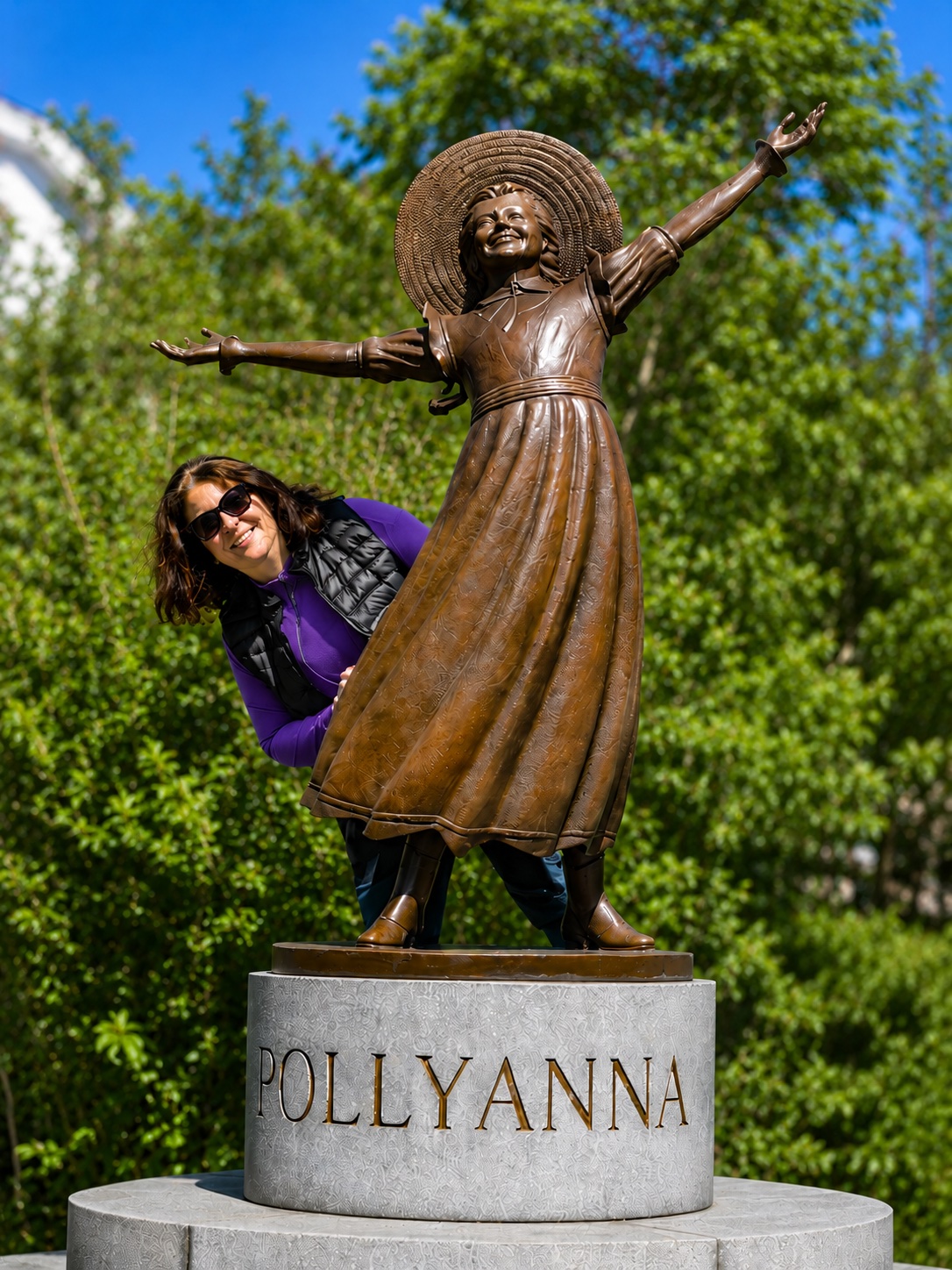
Statue in Littleton, NH: Pollyanna of Littleton, New Hampshire
Pollyanna is misunderstood and dismissed as too woo-woo. Yet, Pollyanna was steeped in reality.
One of the most powerful moments in the book happens after Pollyanna breaks her leg and learns she may never walk again. The little girl who taught everyone in the town how to “play the glad game” suddenly can’t find anything to be glad about herself.
Pollyanna wasn’t pretending pain didn’t exist. She was devastated.
Eventually, the people she had helped over the years came to help her see what her playing the glad game has created: love, friendship, care, meaning, hope.
That’s very different from toxic positivity.
Real gratitude is not:
“Everything is fine.”
“Just stay positive.”
“Look on the bright side.”
Real gratitude is learning to see what still exists alongside the pain. Real gratitude creates lasting results.
Years ago, I revised the GLAD Game with the purpose to help you get unblocked, unstuck, and see a new perspective in a challenge:
• G = Gratitude
• L = Lessons
• A = Analysis
• D = Doing
Because gratitude without action changes very little.
There are hundreds of GLAD examples. Here’s one: I coached a leader who was convinced his CIO was trying to destroy his career. Every interaction felt personal. He avoided him, judged him harshly, and was going to leave the company.
So we worked through GLAD.
Gratitude:
At first, he insisted there was absolutely nothing positive about this person. Eventually, after slowing down and reflecting, he admitted the CIO was persistent, generous to the community, willing to face conflict directly, and deeply committed to results.
Lessons:
He realized he had been jumping to conclusions and reacting to a personality style very different from his own.
Analysis:
We separated facts from assumptions and explored alternative explanations for the CIO’s behavior. What if it wasn’t personal? What if fear, pressure, or different styles were part of the dynamic?
Doing:
Instead of leaving the company, withdrawing, and resenting the relationship, he chose to collaborate more openly and stop operating from a place of defensiveness.
The situation did not magically disappear.
By starting with gratitude, what changed was his ability to see more clearly, respond differently, and create better outcomes.
That is the real Glad Game.
Not denial.
Not bypassing reality.
Not pretending hard things are easy.
It is the ability to remain open enough to still find possibility, learning, meaning, and action inside difficulty.
GLAD is needed even more now, especially in a world overwhelmed by noise, division, burnout, and AI disruption. It is not just a child’s tool. The GLAD tool helps us become more human by staying engaged in reality.
The takeaway is simple, practical, and not always easy –
The next time you feel stuck, burnt out, stressed, defensive, overwhelmed, or hopeless, don’t force positivity.
Instead, try playing the GLAD game; it’s transformative.
Where can you practice the GLAD game?
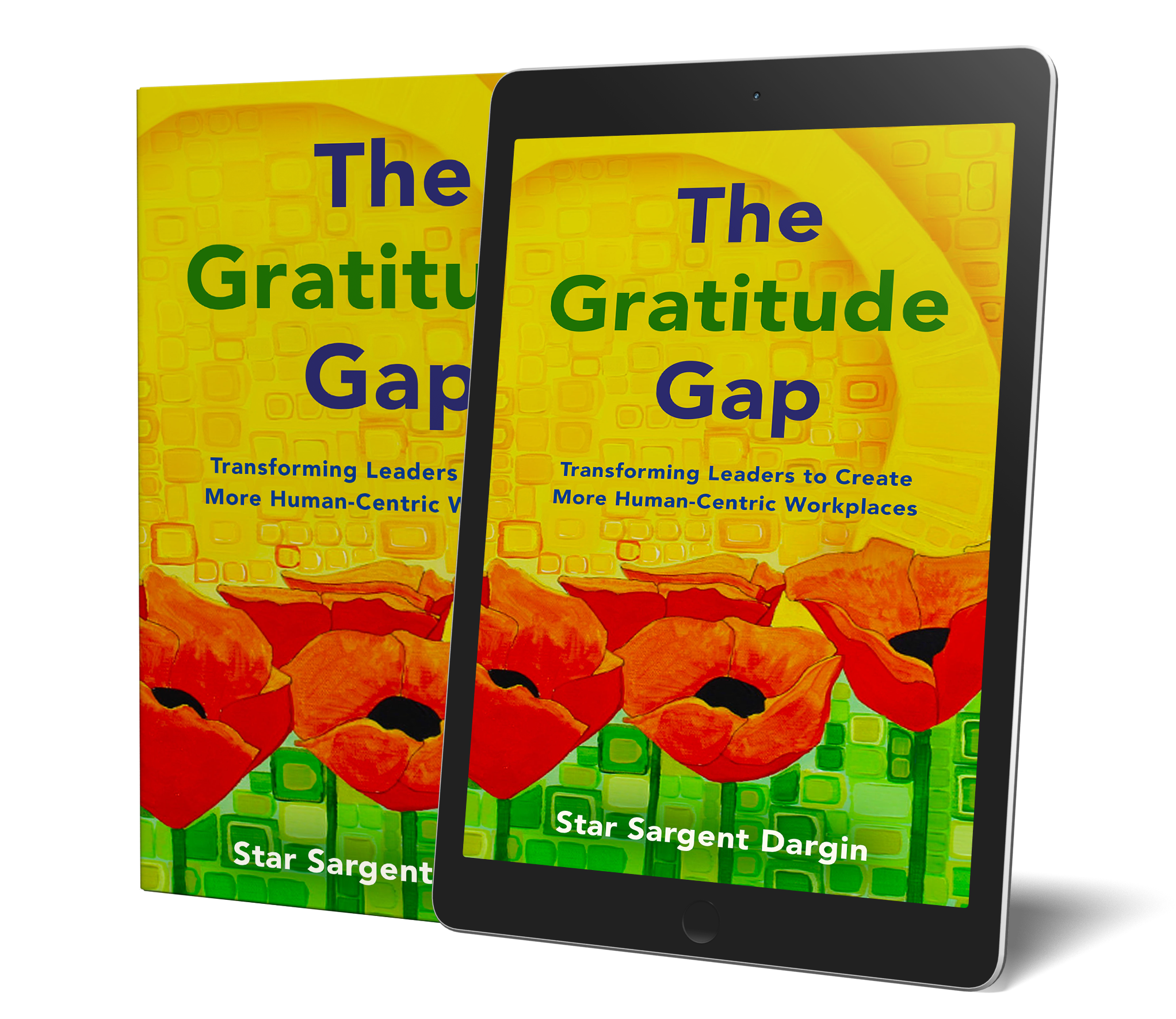
Want to know more about shifting to Gratitude and how to overcome the often invisible challenges of gratitude? Try my book: The Gratitude Gap
References:
Book: Pollyanna, by Eleanor H. Porter